بتن، به دلیل ویژگی ها و خصوصیات منحصر به فردی که دارد، تبدیل به یکی از اجزای اصلی و جدا نشدنی تمامی پروژه های عمرانی شده است. بنابراین چه در حال ایجاد یک سقف باشید و چه یک پروژه راهسازی را مدیریت می کنید، نیاز به بتن خواهید داشت. بهترین و با کیفیت ترین حالتی که میتوان بتن را تولید کرد، بتن آماده (Ready-Mix Concrete) میباشد، اما چطور می توان خرید بتن انجام داد؟
بتن آماده چیست؟
بتن آماده، محبوب ترین انتخاب برای پروژه های ساختمانی در هر شکل و مقیاس است. جهت تولید بتن، آب و سیمان برای ایجاد خمیری چسبنده با یکدیگر مخلوط شده و جهت اتصال مصالح سنگی (ازجمله شن و ماسه) به کار می روند و می تواند شامل افزودنی های معدنی و شیمیایی نیز باشد. در تاسیسات تولید بتن آماده، نحوه این اختلاط با دقت مورد پایش و بررسی قرار می گیرد تا فرآورده ای با کیفیت، بادوام و با کارآیی مناسب تحویل مشتری داده شود.
انتخاب کارخانه بتن معتبر که دارای سابقه درخشان بوده و از جدیدترین تجهیزات و فناوری ها در تولید و حمل بتن استفاده کند، به معنای اطمینان از کیفیت بتن و استفاده از بهترین خدمات و پشتیبانی ها است.
تصویری از بتن آماده Ready Mix Concrete
بررسی مزایای خرید بتن آماده نسبت
بتن آماده روند بتن ریزی کل پروژه ساخت و ساز را آسان میکند. امروزه نگرانی اصلی در مورد کارهای ساختمانی، کمبود زمان است. همانطور که قبلاً گفته شد، کل فرآیند آماده سازی بتن آماده و حمل آن به محل پروژه مبتنی بر سیستم و ماشین آلات است و نیروی انسانی دخالت کمتری در آن دارند.
بتن آماده نسبت به بتن دستی دوام بیشتری دارد زیرا کیفیت مواد تشکیل دهنده آن مراحل مختلف آزمایش را طی کرده است. بتن دستی در محل پروژه ساخته میشود و مهندسین و کارگران بتن را در محل با طرح اختلاط کارگاهی تهیه میکنند. اما اکنون وقت آن است که در مورد تفاوت بین بتن آماده و بتن دستی اطلاعات خود را کامل کنید:
1- تجهیزات ساخت بتن
بتن آماده نیازی به داشتن تجهیزات تولید بتن در محل پروژه ندارد، در حالی که بتن دستی به یک میکسر و همچنین سایر تجهیزات کارگاهی نیاز دارد. این تجهیزات ممکن است پرهزینه باشند و فضای کارگاه را اشغال میکنند. همچنین باید فضایی را برای نگهداری مصالح در نظر بگیرید. ممکن است در زمانی که شرایط آب و هوا بد است، نیاز به نگهداری خاصی برای مصالحی مانند سیمان نیاز باشد.
2- زمان تولید بتن
همچنین این واقعیت وجود دارد که بتن آماده زمان بسیار کمتری برای تولید و بتن ریزی نیاز درد. بتن آمده از قبل تولید شده و تنها به محل پروژه حمل میشود. از سوی دیگر، بتن دستی شده در محل تولید میشود و به دلیل وجود چندین مرحله اختلاط، فرمولهایی که باید به دقت در نظر گرفته شوند و همچنین زمان گیرش، روند بسیار کندتری دارد. آماده سازی و اختلاط بتن دستی زمان و تلاش زیادی را میطلبد.
3- نوع پروژه ساخت
از نظر کاربردها، بتن آماده عموماً برای سازههای بلند مرتبه و سایر پروژههای عظیم بهترین استفاده را دارد، در حالی که بتن دستی برای سازههای کم ارتفاع مناسب است. اما نباید این نکته را فراموش کرد که حتی یک ساختمان 4 طبقه با متراژ کم هم به بتن آماده برای فونداسیون و سقف نیاز دارد. با اینکه ممکن است بسیاری از کارفرمایان از بتن دستی برای بتن ریزی ستون استفاده کنند اما توصیه ما این است که برای پروژههای کوچک نیز به سراغ بتن آمده بروید زیرا از نظر کیفیت اطمینان بیشتری ایجاد میکند.
4- توزیع و حمل بتن
یکی دیگر از مشکلات بتن دستی در محل، نیاز به حمل با تجهیزات خاص است. بتن آماده با پمپ در محل ریخته میشود اما حمل بتن تولید شده با میکسر در کارگاه با فرغون انجام میشود. این نحوه حمل باعث تغییر در خصوصیات بتن، اتلاف وقت و کاهش ارزش سرمایه گذاری در بلند مدت میشود (به خصوص برای بسازبفروشها). پس نحوه توزیع بتن آماده از همه جهات به صرفه خواهد بود.
5- ضایعات ناشی از بتن
اگر از بتن دستی استفاده میکنید، به دلیل ذخیره سازی و فرآیند اختلاط مقداری بتن از بین میرود. با این حال، وقتی صحبت از بتن آماده میشود، ضایعات مواد در محل ساخت و ساز حداقل هستند. به عبارت دیگر، بتن آماده ضایعات کمتری در محل کار ایجاد میکند و بتن محاسبه شده به طور دقیق به پروژه تحویل داده میشود. بتن دستی باعث از دست رفتن سیمان و مصالح دیگر میشود که هزینههای پروژه را افزایش میدهد.
6- ذخیره سازی
اگر از بتن آماده استفاده میکنید، به این معناست که باید فضای کافی برای کامیون میکسر بتن وجود داشته باشد تا بتن را پشتیبانی و تخلیه کند. با این حال، اگر از بتن دستی استفاده میکنید، به فضایی برای ذخیره سازی مواد و برای مخلوط کنهای دستهای (که احتمالاً فضای کمتری نسبت به کامیون بتن اشغال میکنند) نیاز دارید. برای بتن ریزی با کامیون میکسر معمولاً از لولههای پمپ استفاده میشود و حتماً نیازی نیست میکسر نزدیک پروژه باشد.
7- نیروی کار
تفاوت دیگر این است که اگر از بتن آماده خریداری کردید، نیروی کار شما فقط باید نحوه ریختن و متراکم کردن بتن را بداند. از طرف دیگر، با بتن دستی در سایت، کارگران شما باید بدانند که چگونه بتن درست کنند. این فرآیند به این سادگی که به نظر میرسد نیز نیست! بتن آماده به نیروی کار تخصصی و نظارت دقیق در طرح اختلاط دارد. همچنین به دلیل تعداد بیشتر نیروهای کار باید هزینه بیشتری به آنها پرداخت کنید.
8- کیفیت تولید بتن
اگر از بتن دستی استفاده میکنید، احتمال پایین بودن کیفیت بتن بسیار زیاد است. اگر کارگران شما نمیدانند چه کاری باید انجام دهند و مواد را به شکلی مهندسی مخلوط نمیکنند (با استفاده از نسبتهای مناسب) بتن بیکیفیت تحویل میگیرد. با این حال، بتن آماده در یک محیط حرفهای توسط متخصصان آموزش دیده ساخته میشود و بنابراین کیفیت بالایی دارد. کارخانههای بتن آزمایشگاههای کنترل کیفیت دارند.
9- سفارش بتن
آنچه در مورد بتن آماده یک مزیت مهم محسوب میشود، این است که بتن را میتوان با چند آیتم مانند مقاومت فشاری، اسلامپ و متراژ مورد نیاز سفارش داد. در حالی که محاسبه جزئیات بتن دستی بسیار دشوارتر هستند زیرا شما باید تمام اجزا را به صورت جداگانه در نظر بگیرید. این کار احتمال خطا را افزایش میدهد و ممکن است هزینههای شما بالا ببرد.
تصاویر اجرای بتنریزی فونداسیون
نکات مهم در آماده کردن محیط کارگاه برای بتن ریزی
مکان مناسبی را برای تامین کننده برای پارک کامیون میکسر بتن پیدا کنید. اگر کامیون را نمیتوان در نزدیکی پروژه پارک کرد، به پمپ بتن نیاز دارید. معمولاً تامین کننده نسبت به موقعیت مکانی با شما مشورت خواهد کرد.
شرایط آب و هوایی را پیش بینی کنید. اگر در روز بتن ریزی باران خواهد بارید، تحویل بتن را به تاخیر بیندازید. اگر روزهای بارش طولانی است، تدابیر لازم برای بتن ریزی در بارندگی را اتخاذ کنید.
برای اطمینان از حجم مناسب بتن سفارش داده شده، از قبل با تامین کننده صحبت کنید. همیشه توصیه میشود 10 درصد بتن بیشتری سفارش دهید تا در زمان بتن ریزی، بتن کم نیاید.
به همسایگان خود نسبت به تاریخ و ساعت بتن ریزی اطلاع رسانی کنید. یک بنر در نزدیکی پروژه نصب کنید و نسبت به ایجاد سروصدا مراتب عذرخواهی را اعلام کنید.
شرایط قالب بندی پروژه را حداقل یک روز قبل بررسی کنید. قالب بندی باید به اندازه کافی ایمن و محکم باشد تا بتواند مقدار بتنی که سفارش دادهاید را تحمل کند. از فاصله موقعیت میلگردها نیز مطمئن شوید.
نیروی انسانی کافی برای حمل دهانه پمپ، تسطیح بتن، ویبره کردن و غیره را آماده کنید. هر کارگر باید مسئولیت مختص به خود را داشته باشد.
پس از بتن ریزی و فرم دهی، روی بتن را با ورقههای پلی اتیلن یا گونی بپوشانید تا رطوبت خیلی سریع خارج نشود. این کار باعث میشود که بتن به درستی عمل آوری شود و به اوج مقاومت خود برسد.
چرا باید بتن آماده بخریم؟
1- دریافت بتن با کیفیت
یکی از مهمترین دلایلی که بیشتر سازندگان و پیمانکاران، بتن آماده را ترجیح می دهند، اطمینان از کیفیت آن است. با استفاده از کنترل اجزای تشکیل دهنده، کنترل دقیق نسبت آب به سیمان و همچنین استفاده از علم و تکنولوژی روز در جهت تولید بتن، کیفیت آن تضمین می گردد.
بتن آماده در کارخانه و با استفاده از تجهیزات پیشرفته تولید می شود
از طرف دیگر، بتن فرآورده ای مهندسی است و باید از دانش و تجربه در ساخت آن بهره برد. کارخانه های بتن با داشتن نیروهای متخصص و انجام آزمایش های مختلف، بتن مورد نیاز پروژه های مختلف را در نهایت کیفیت تولید میکنند.
2- صرفه جویی در زمان
با ساخت بتن در محل پروژه، سازندگان باید تمام اجزا و تاسیسات لازم جهت تولید بتن را تهیه و زمانی را صرف تولید آن نمایند که همین موضوع، فشار زمانی زیادی را وارد خواهد نمود و در صورت بروز مشکل در فرآیند تولید بتن، کل پروژه را تحت تاثیر قرار خواهد داد.
در مقابل، بتن آماده می تواند هر نوع پروژه ای را از چنین دردسرهایی نجات دهد، زیرا تمامی موارد فوق، توسط کارخانه های بتن آماده مدیریت می شود. بتن در کارخانه بتن با استفاده از تجهیزاتی پیشرفته تولید و سپس به محل پروژه حمل می شود. این مهم، به صرفه جویی در زمان کمک شایانی می کند.
3- کاهش هزینه های پرداختی
تولید بتن در محل پروژه ساختمانی شامل هزینه های نیروهای کار، تهیه و انتقال مواد تشکیل دهنده و خریداری ماشین آلات و تجهیزات اختلاط بتن است که در مقایسه با خرید بتن آماده، بسیار هزینه بر است.
برعکس، در صورت استفاده از بتن آماده، پیمانکاران تنها باید هزینه خرید بتن آماده را پرداخت کنند و در زمان تعیین شده، بتن خود را تحویل گرفته و عملیات بتن ریزی را انجام دهند.
4- کاهش فضای ذخیره سازی مصالح
یافتن فضای ذخیره سازی برای مواد اولیه تولید بتن نه تنها چالش بر انگیز است بلکه هزینه بر نیز است. سیمان، شن و ماسه برای انبار کردن نیاز به فضا، نگهداری و پایش منظم دارند. در چنین شرایطی، یافتن موقعیتی برای ذخیره سازی مصالح، به خصوص در پروژه های ساختمانی کوچک، دشوارتر می شود.
سفارش بتن آماده این مشکل را به کلی حل میکند، زیرا دیگر نیازی به فضای ذخیره سازی نیست. تمامی فرآیند تولید بتن در محل کارخانه انجام شده و دغدغه کمبود فضا در کارگاه ساختمانی وجود نخواهد داشت.
برای تولید بتن آماده تمام مصالح مورد نیز از قبل توسط کارخانه بتن تهیه شده است.
نکات مهم در انتخاب کارخانه بتن آماده
انتخاب یک کارخانه بتن معتبر به چندین عامل بستگی دارد که به شرح زیر هستند :
امکانات و تجهیزات کارخانه
یکی از مهمترین دلایلی که پروژه های ساختمانی را مجبور به خرید بتن آماده می کند، کاهش هزینه نیروهای کاری، هزینه ذخیره سازی و زمان ساخت بتن است. همه این مزایا به دلیل عملیات مکانیزه و تجهیزات پیشرفته کارخانه های بتن آماده میسر می شود که فرآیند تولید و حمل بتن را به شکلی مهندسی شده انجام می دهند.
کارخانه های بتن آماده، از فرآیند ها و فنآوری های تولید پیشرفته و خودكار استفاده می كنند تا روند تولید و پایش کیفیت بتن را تسهیل ببخشند. بنابراین مهم است که مشتریان از امکانات و تجهیزات کارخانه های بتن مطمئن شوند تا بتوانند نسبت به هزینه ای که پرداخت می کنند، پروژه خود را با کیفیت بالا و طبق برنامه زمانی اجرا کنند.
اعتبار کارخانه
بررسی اعتبار کارخانه بتن ضروری است، زیرا نشان دهنده این است که تا چه اندازه در بین سازندگان و مدیران پروژه ها محبوب هستند. به طور کلی، نمی توان به همین راحتی به یک شرکت ناشناخته در بازار اعتماد کرد. اگر مشتریان، کارخانه را از نزدیک مشاهده کرده و امکانات و تجهیزات موجود را بررسی کنند، میتوانند اطلاعات دقیقی از نحوه عملکرد کارخانه داشته باشند.
سابقه و تجربه کارخانه
سابقه کارخانه های بتن آماده مهم هستند زیرا نشان دهنده آن است که آنها نسبت به تولید، حمل و بتن ریزی، چه تجربهای دارند. کارخانه های باتجربه و با سابقه، در مواجهه با شرایط غیر منتظره، آمادگی بیشتری دارند و می توانند وضعیت بحرانی به وجود آمده را مدیریت کنند.
برای مثال، شرایط بحرانی آب و هوایی یا وضعیت جاده ها یا مشکلات مربوط به بتن ریزی در محل کارگاه، هر کدام به تنهایی می توانند روند بتن ریزی را مختل کند. یک کارخانه بتن خوب باید تمام جوانب کار را پیش بینی کند تا بتواند با حفظ کیفیت، بتن را به موقع تحویل دهد.
مراحل گام به گام خرید بتن آماده
مشخص کردن نوع بتن
انتخاب نوع بتن اولین مرحله در سفارش بتن است. برای این کار مهم است که مشخصات بتن اعم از رده مقاومتی، عیار سیمان مورد نظر، اسلامپ درخواستی، نوع افزودنی های مورد استفاده و موارد دیگر به درستی طبق محاسبات انجام شده توسط طراح سازه استخراج شوند. نوع بتن بسته به خصوصیات هر پروژه متفاوت خواهد بود و کارخانه بتن نیز باید بتواند نیاز های پروژه را به درستی برآورده کند. در صورت نیاز، کارشناسان کارخانه از محل پروژه بازدید و با مشورت با طراحان آن، در خصوص نوع بتن تصمیم گیری می کنند.
متراژ مورد نیاز و نوع مقطع برای بتن ریزی
بعد از تعیین نوع بتن، حالا باید متراژ و نوع مقطع بتن ریزی محاسبه شود. این مقدار بر حسب متر مکعب بیان می شود و می بایست حجم هر مقطع از نظر طول، عرض و ارتفاع محاسبه شود. انجام این کار ساده است و سرپرست کارگاه یا مهندس اجرایی می تواند با محاسبه متراژ مورد نیاز و بیان خصوصیات آن مقطع (نظیر نوع مقطع سازه ای، ارتفاع و …)، روند کار را برای خرید بتن آماده تسهیل بخشد.
تعیین زمان بتن ریزی
بتن ریزی، کاری زمان بر است و هرچه پروژه بزرگ تر باشد، انجام این کار نیز طولانی تر میشود. به همین دلیل، مهم است که بتن ریزی در ساعتی از روز انجام شود که ترافیک مسیر، حداقل بوده و مشکلات مربوط به محل کارگاه (اعم از پارک خودرو و …) وجود نداشته باشد. زمان بتن ریزی باید طوری تعیین شود که کارگران در دسترس باشند تا بتوانند هرگونه فرآیند قبل، حین و بعد از بتن ریزی مانند قالببندی، پخش و تسطیح بتن و عملیات تراکم (در صورت نیاز) را انجام دهند.
خرید حضوری یا اینترنتی بتن آماده
حال، زمان سفارش بتن آماده است. در این مرحله دو روش وجود دارد، یکی این که باید به صورت حضوری به دفتر فروش یا کارخانه بتن مراجعه کنید و سفارش خود را ثبت کنید، دیگری اینکه می توانید بتن را به صورت آنلاین خریداری کنید. خرید آنلاین بتن بسیار راحت است، شما میتوانید در خانه و تنها با چند کلیک، بتن مورد نظرتان را سفارش دهید، اما اگر به دنبال کسب اطلاعات بیشتر در مورد نحوه فعالیت کارخانه بتن هستید، خرید حضوری پیشنهاد می شود.
در این مرحله مواردی از جمله خصوصیات بتن، آدرس و موقعیت هندسی محل پروژه، متراژ و اطلاعات دیگر از شما گرفته میشود.
قیمت بتن آماده چقدر است؟
قیمت بتن آماده در اغلب موارد نسبت به بتن تولید شده در کارگاه، اقتصادی تر است اما قیمت آن بسته به شرایط مختلف ممکن است متفاوت باشد. مثلاً افزایش هزینه سیمان و سنگدانه ها به طور مستقیم در قیمت بتن آماده تأثیرگذار هستند. عوامل مؤثر در هزینه تولید بتن آماده عبارتند از :
قیمت مواد اولیه
مشخصات بتن
حمل و نقل (مسافت کارخانه تا محل پروژه)
شرایط آب و هوایی
نیاز به تجهیزات خاص بتن ریزی
متراژ بتن ریزی
نکات مهم در حمل و نقل بتن
چند عامل مهم در حمل بتن آماده تأثیرگذار است که بیشتر، جنبه های لجستیکی داشته و شامل موارد زیر میشود :
فاصله کارگاه از کارخانه
داشتن تجهیزات کافی و پیشرفته حمل بتن توسط کارخانه
سهولت دسترسی به محل کارگاه و موقعیت هندسی و مکانی قطعه بتن ریزی شده
عوارض فصلی و جوی
مقیاس پروژه
تعداد کارگران موجود
انتقال موفقیت آمیز بتن مستلزم تدبیر و برنامه ریزی استراتژیک است. انجام یک انتخاب نامناسب در هر مرحله احتمالاً منجر مشکلات عدیده می شود. بین حمل کارآمد بتن و موفقیت در بتن ریزی پروژهها، رابطه نزدیکی وجود دارد. به همین دلیل، هماهنگی در تحویل و انتقال بتن برای تأمین نیازهای یک پروژه و همچنین، انتخاب یک کارخانه معتبر جهت برآورده کردن این نیازها، امری ضروری است.
سیستم حمل بتن بروز و پیشرفته، تاثیر زیادی در کیفیت بتن ریزی دارد و در نهایت کیفیت بتن دارد
فهاب بتن
خرید بتن آماده مزایای زیادی دارد و می تواند از نظر هزینه و زمان، بسیار به صرفه باشد. امروزه کارخانه های زیادی در زمینه تولید بتن فعالیت می کنند و هر کدام بسته به امکاناتشان، بخشی از بازار را در سیطره خود دارند. در این میان، فهاب بتن با داشتن سابقه زیاد، تجهیزات و ماشین آلات مدرن، واحد ترانسپورت پیشرفته، واحد کنترل کیفیت با تجربه و داشتن یکی از پیشرفته ترین آزمایشگاه های بتن در سطح کشور، در ارائه بتن آماده با کیفیت و با دوام توانسته طیف گسترده ای از انواع و اقسام پروژه ها با مقیاس ها و نیازهای مختلف را پوشش دهد.
بتن ریزی فرودگاه مهرآباد تهران توسط فهاب بتن
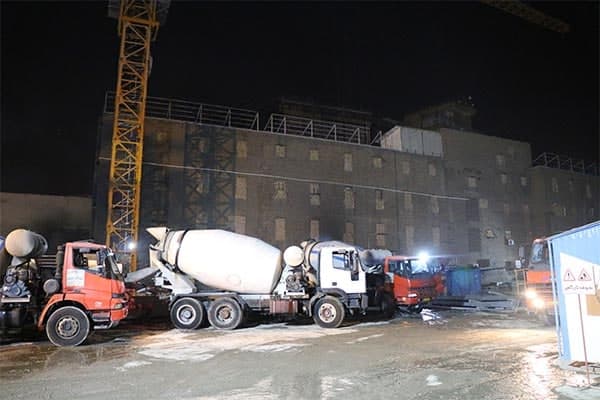
بتنریزی شبانه روزی
فهاب بتن با توجه به داشتن تجهیزات پیشرفته تولید و حمل، به صورت 24 ساعته و شبانه روزی فعال می باشد و هم در طول روز، هم در طول شب، اقدام به تولید، حمل بتن و بتن ریزی پروژه ها می نماید.
بتن ریزی ساختمان پلاسکو جدید توسط فهاب بتن و به صورت شبانه انجام شده است.
Figure 1 – Concrete is the most used construction material in the world
Concrete is the most used construction material in the world
In a broad sense, a substance formed through the utilization of an adhesive [2] is referred to as concrete. Typically, this adhesive substance originates from the chemical reactionbetween hydraulic cement [3] and water.However, this rudimentary definition encompasses a diverse array of concretes, encompassing those incorporating various types of cement, concretes integrating pozzolanssuch as fly ash[4],iron smelting furnace slag[5],and silica fume[6].Additionally, it includes concretes incorporating additives[7],recycled aggregates[8],polymers[9],[10]and fibers.[11]Such concretes may undergo diverse treatments, including exposure to heat, steam,[12]high-pressure processing (autoclave),[13]and vacuum,[14] among other methods.
Presently, the breadth of this domain has expanded considerably owing to noteworthy advancements in the concrete industry. Its versatility now encompasses a diverse spectrum of concepts, including structural lightweight concrete,[15]heavyweight concrete,[16]high-strength and ultra-high-strength concrete,[17]durable and exceptionally robust concrete,[18]self-compacting concrete,[19]concrete endowed with shrinkage compensation properties,[20]mass concrete,[21]roller-compacted concrete,[22] and various other forms contribute to the broad and dynamic realm of this essential construction material.
The Historical Evolution of Cement and Concrete Usage:
Cement, a fundamental constituent of concrete, traces its origins back approximately 12 million years. Formed through the chemical reaction between limestone and oil-bearing rock in what is now Israel. these naturally occurring sediments containing cement compounds were unearthed and recognized by geologists during the 60s and 70s of the 20th century.
The earliest structures resembling concrete were constructed around 6500 BC by the Nabataeans and Bedouins in southern Syria and northern Jordan. Moving forward to approximately 5600 BC, residences with concrete floors emerged along the Danube River in regions that once comprised the former Yugoslavia. By 3000 BC, ancient Egyptians utilized a blend of mud and straw, creating a mixture akin to cement mortar, to construct the triple pyramids. The Great Pyramid of Egypt alone utilized about 500,000 tons to interlock the stones. Concurrently, the Chinese employed a cement-type material for boat construction and the Great Wall of China
Figure 2 – The inception of the ancient city of Petra by the Nabateans in Jordan
Around 600 BC, the Greeks stumbled upon natural pozzolan with hydraulic properties when combined with lime. However, it was the Romans who harnessed this discovery to its fullest potential in their constructions. The Pantheon, finalized by Emperor Hadrian in 125 AD, stands as the largest unreinforced concrete dome ever constructed. Following the fall of the western Roman Empire in 476 AD and persisting into the Middle Ages, the methodology for producing pozzolanic cement remained shrouded in mystery. It wasn’t until 1414 that manuscripts detailing the production of this cement type were unearthed, reigniting interest in this construction material.
Figure 3 – Pantheon temple in Rome; The world’s largest unreinforced concrete dome
Cement technology experienced significant advancement in 1793 following John Smeaton’s breakthroughs[23] in producing cement clinker[24] through the calcination of limestone-containing clay. Smeaton employed this material in the historical restoration of the Eddystone lighthouse[25]in Cornwall,[26] England.
Figure 4 – Reconstruction of Eddystone’s lantern design by Smeaton, completed in 1759 and destroyed after 126 years due to bedrock erosion.
Finally, Joseph Aspdin pioneered today’s[27] Portland cement in 1824[28] by firing gypsum powder and clay in a kiln. The nomenclature “Portland cement” was attributed to its resemblance to the building stones of the Portland region in England. In 1891, George Bartholomew constructed the first concrete street[29] in Bellefontaine, Ohio,[30] which remains in service to this day.
Figure 5 – The inaugural concrete street still in use
For a deeper dive into these historical cases, refer to the article “Concrete History.”
Concrete Components and their Interplay:
Concrete, in its essence, is crafted through the amalgamation of cement, water, and aggregate, with the potential inclusion of additives. A pivotal query that arises pertains to the relationship and proportionality of these Components. Addressing this inquiry involves consideration from three distinct perspectives:
The first perspective positions the binder, the output of [31], as the primary Component of concrete. In this view, aggregates assume the role of a cost-effective filler within the mixture.
The second perspective posits that [32] functions as a diminutive construction material amalgamated with mortar, itself a combination of hydrated cement and [33].
The third perspective, akin to the first, conceives concrete as comprising two phases: hydrated cement paste and aggregate. Consequently, the concrete’s properties are a derivative of the characteristics inherent in these two components and their interplay.
The second and third perspectives are deemed more favorable for elucidating concrete behavior, with the first perspective, grounded in the filling properties of aggregates, being less pertinent. If hypothetically, the cost of cement becomes lower than that of aggregate, thus removing the cheapness of aggregate from the conversation, can cement and water alone serve as viable construction materials?
The unequivocal response to the aforementioned query is negative.[34] This is attributable to factors such as the significantly greater volume changes and[35] increased shrinkage[36] and creep of hydrated cement paste compared to[37] concrete. Furthermore, the substantial heat generated by the extensive volume of hydrated cement, particularly in hot weather conditions, contributes to cracking.[38] Additionally, empirical observations affirm that aggregates exhibit greater resistance to chemical attacks than cement paste. Consequently, transcending considerations of price and cost, the incorporation of aggregate in concrete is deemed advantageous.
Figure 6: Karun Dam 4, the fifth-highest hydroelectric dam globally and the largest and tallest concrete dam in Iran.
Implementation of Knowledge in Concrete Production:
Concrete stands as the most extensively utilized material globally, and as such, understanding how to define “good concrete” becomes paramount amid the myriad topics at hand. It is imperative, however, to initially delineate ” bad and poor-quality concrete,” which regrettably represents the prevailing form of construction material. Imagine a soup-like blend solidifying into a weak, uneven mass marred by unsightly[39] honeycomb holes. Strikingly, both good and bad concrete share parentage—cement, water, and aggregate. The differentiating factor? The masterful touch—knowledge and[40]a nuanced understanding of implementation.
Figure 7 – China’s Three Gorges Dam[41]: The heaviest concrete structure globally
Addressing the discourse on knowledge in ready-mixed concrete production, two overarching criteria for assessing good concrete emerge. These criteria encompass ensuring requisite conditions in the two states of “fresh concrete” and[42]“hardened concrete.”[43]Fresh concrete requirements necessitate an optimal consistency for compaction using standard workshop equipment[44] and adequate viscosity[45] for conveyance and concreting[46] without[47] segregation. Regarding hardened concrete, the provision of compressive strength is typically imperative,[48] , as it is easy to measure. While the compressive strength test result does not singularly ascertain the intrinsic strength of concrete, it serves as a test for its quality. Consequently, compressive strength stands as a robust indicator to validate concrete conformity with guidelines and contractual stipulations.
Figure 8 – Transporting fresh concrete to the project site and concreting
Compressive strength mirrors certain properties and attributes of concrete,[49]including density,[50]impermeability,[51]durability,[52]abrasion resistance,[53]impact resistance,[54]tensile strength, and sulfate resistance,[55] etc among others. However, essential characteristics such as shrinkage and creep lie beyond the purview of compressive strength. Notably, these attributes are not exclusively contingent on compressive strength;[56] water/cement ratio or cement grade[57] may exert influence. However, from a holistic perspective, concretes exhibiting higher compressive strength generally manifest more favorable characteristics and specifications.
Concrete properties are not solely contingent on the attributes of their components[58] but also hinge on the interface (distance) between them[59] and their interactive dynamics. To comprehend this concept, it is crucial to recognize that the volume of well-compacted fresh concrete exceeds the compacted volume of its aggregate components by about 3% or more. This discrepancy arises from the fact that the aggregates in concrete are not interconnected point-to-point; rather, a thin layer of cement paste delineates them.[60] This thin layer is termed the Interfacial Transition Zone (ITZ) between the cement paste and aggregate.
Figure 9 – Transition Zone between cement paste and aggregate (ITZ)
A consequential insight from this observation is that the mechanical properties of concrete, such as rigidity, cannot be directly correlated to the mechanical properties of aggregates.[61]Instead, they hinge on the unique properties of each aggregate and the[62] concrete structure. Another insight pertains to the modulus of elasticity,[63] wherein individual aggregates and hydrated cement paste[64] exhibit a linear stress-strain relationship. However, their amalgamation yields a curvilinear relationship due to microcracks developing in the[65]Transition Zone under loading. The proliferation of these microcracks escalates local stress intensity and strain magnitude, causing the strain to increase at a faster rate than the stress, thereby initiating a bending in the stress-strain diagram.
Steel or Concrete? T hat is the question!
How is concrete, seemingly inferior in strength and hardness compared to steel is the most widely employed engineering material? The reasons can be summarized as follows:
Diverging from ordinary wood and steel, concrete boasts remarkable water resistance, rendering it an ideal material for constructing water monitoring, storage, and transfer facilities. Notably, some of humanity’s oldest structures, including waterways[66]and dams dating back[67]to the Roman period, were fashioned using a rudimentary form of concrete The resilience of concrete in corrosive environments, such as coastal areas, were fashioned using a rudimentary form of concrete[68] stands as an additional catalyst for the prevalent use of this construction material.
The malleability of fresh concrete allows for the creation of diverse shapes. Employing molds with varying geometries addresses both structural and architectural requirements. This adaptability contributes to the widespread applicability of concrete in construction.
With lower corrosion potential compared to steel, concrete requires easier and more affordable maintenance.
This attribute enhances its longevity and reduces upkeep costs.
Concrete exhibits heightened resilience to cyclic loading and fatigue in contrast to steel.
This [69] positions concrete as a preferred choice in scenarios where enduring [70] under repeated stress is imperative.
Change is inevitable, yet the pace and abruptness of transformative developments can be markedly disruptive. Presently, we confront economic and environmental challenges stemming from factors such as population growth, urbanization, and the ramifications of technology. While these elements are interconnected, each warrants separate examination to enhance our understanding of their historical impacts and facilitate more accurate predictions for the future.
Population Growth: In the early 20th Century, the global population stood at approximately 1.5 billion people, a figure that escalated to 6 billion by the Century’s end. It is noteworthy that the journey from 1.5 to 6 billion transpired within a mere hundred years, contrasting sharply with the 10,000 years required for the world’s population to reach 1.5 billion following the last ice age. This demographic explosion necessitates extensive infrastructure development, with construction in which concrete is an integral component, constituting a critical need.
Urbanization: Statistics reveal a direct correlation between population growth and the escalating trend of urbanization. In the early 20th Century, roughly 10% of the global populace resided in cities, a percentage that surged to 50% at the outset of the 21st Century. Consequently, the expansion of cities and urban infrastructures must exhibit commensurate growth to meet the demands of this transformative urban landscape.
Technology and its Environmental Impacts: Both population growth and urbanization exert profound influences on the energy, production, and transportation sectors. Regrettably, our technological decisions are often based on short-term considerations with narrowly defined objectives, neglecting the long-term consequences of these choices. A study conducted at the beginning of the 21st Century by Hawken et al.[72] revealed that a mere 6% of the total global material flow, exceeding 500 billion tons annually, culminates in consumer products. The remaining raw materials revert to nature in the form of solid, liquid, or gaseous wastes, posing environmental hazards.
Environmental Pollution: Environmental pollution, though not a novel concern, has evolved from regional to global dimensions. Contemporary scientists contend that the most pressing environmental challenge is human-induced climate change, which has led to global warming over the past Century due to increased greenhouse gas concentrations in the Earth’s atmosphere. Consequently, since 1990, a considerable number of severe weather events have been documented across the globe. I n tandem with the depletion of natural resources, the quality of the environment—critical for sustaining life and fostering sustainable development—is also in decline.
Conventional concrete typically comprises 12% cement, 8% water, and 80% aggregate by mass. These proportions translate to the global consumption of 1.5 billion tons of cement, 9 billion tons of sand, and 1 billion tons of water in concrete production. This industry, amounting to 11.5 billion tons, stands as the largest consumer of natural resources globally and is projected to escalate to 16-18 billion tons annually by 2050. Examining these figures leads to the conclusion that the extraction, refinement, and transportation of such substantial materials, coupled with the energy-intensive production processes, significantly impact the ecological balance of regions.
While concrete made from Portland cement is commonly perceived as environmentally friendlier than alternative building materials, it is imperative to address and mitigate the environmental impact of the concrete industry. Portland cement, the primary hydraulic component of concrete, is notably energy-intensive, requiring 4 gigajoules of energy per ton of cement, and concurrently emits substantial carbon dioxide during production. The production of one ton of Portland cement clinker releases approximately one ton of carbon dioxide, contributing to nearly 7% of global carbon dioxide emissions from the production of 1.5 billion tons of cement annually.
Two overarching approaches can be employed to address the environmental effects of the concrete industry. The long-term strategy involves reducing the rate of concrete consumption, though this is impractical, particularly given the ongoing global development and the continued demand for this essential material. Alternatively, the use of industrial ecology, which emphasizes the incorporation of[73] recycled and alternative materials, presents a viable solution. This involves appropriately recycling demolished materials, utilizing wastewater and non-potable water, and substituting a portion of cement with pozzolans such as fly ash, blast furnace slag, silica fume, and zeolite, among others.
In summary, the short-term focus for reducing carbon dioxide emissions involves two primary strategies: diminishing clinker content in the final cement product through maximum utilization of mineral additives and incorporating blended cement[74] in concrete production. Fly ash exhibits the most promising potential for curbing greenhouse gas emissions among mineral additives. Based on Jaren’s research,[75]fly ash is anticipated to emerge as the most potent tool for fostering sustainable development in the concrete industry over the next two decades.
Durability of Concrete and its Implications for Sustainable Development:
In the context of the previously mentioned industrial ecosystem cases, it becomes evident that addressing the sustainable development of the concrete industry through short-term solutions is only a partial remedy. Long-term sustainable development necessitates substantial advancements in resource efficiency. It is evident that extending the service life of concrete and concrete structures will have a profound impact on diminishing the resource consumption inherent in this industry.
An essential question emerges: What is the timeframe available to transform the concrete industry and align it with the principles of sustainable development, considering the imminent risk of reaching irreparable and irreversible global climate conditions and depletion of natural resources?
Figure 11 – Projected Population Growth Rate and Concrete Consumption in the 21st Century
(Mehta, P.K., Concr. Int., Vol. 24, No. 7, pp. 23–28, July 2002.)
Current global population forecasts indicate stabilization in Europe and North America, with declining population growth rates observed in Asia, Africa, and South America. Experts anticipate that the world’s population will burgeon to approximately 9-10 billion people by 2050 before entering a stabilization phase. Given the direct correlation between population growth and urbanization, it is estimated that nearly three-quarters of this population will reside in urban areas.
Based on the present rate of concrete consumption, projections suggest that annual consumption could surge to 16 billion tons by 2050. Subsequently, applying industrial ecology principles in industries and construction, coupled with advancements in structural durability, is expected to prompt a downward trajectory. Consequently, the perspective of sustainable development within the concrete industry is envisaged as a transformative movement in the coming Century. Throughout the past Century, various facets of the concrete industry have successfully surmounted obstacles and challenges, positioning themselves as integral contributors to an overarching initiative striving to enhance the industry’s environmental sustainability.
The Final Conclusion:
In conclusion, concrete emerges as the most extensive man-made product, embodying a tripartite composition comprising cement paste, aggregate, and the transition zone between the cement paste and aggregate. Only the aggregate remains constant among these three constituent phases, while the other two phases undergo changes and development over time. Only the aggregate remains constant among these three constituent phases, while the other two phases undergo changes and development over time. This dynamic nature is reflected in the etymology of the English term “concrete,” derived from the Latin root “Concretus,” signifying growth. Notably, aside from cement, water, and aggregate, air also constitutes a concrete structure component.
Figure 12 – A representation of the estimated percentage distribution of concrete components (source: [76] website)
Challenge your knowledge and seek improvement!
To delve deeper into the subject matter, explore the following inquiries:
1. In the context of concrete, is the Transition Zone stronger or weaker compared to the mass of cement paste? What factors contribute to this strength or weakness?
2. What is the optimal ratio of constituent components in well-constructed concrete? Can achieving the correct proportion of components guarantee the production of “good concrete”?
3. How is the durability of concrete defined, and what characteristics contribute to a concrete structure’s extended lifespan?
Reference
Burrows, R.W., The Visible and Invisible Cracking of Concrete, ACI Monograph No. 11, p. 78,
Corinaldesi, V., and G. Moricani, ACI SP-199, American Concrete Institute, Farmington Hills, MI, pp. 869–884, 2001.
Gjerde, T., Nordisk Betong (Stockholm), No. 2–4, pp. 95–96, 1982.
Hawken, P., E. Lovins, and H. Lovins, Natural Capitalism—Creating the Next IndustrialRevolution, Boston, Little Brown, p. 369, 1999.
Jahren, P., Greener Concrete—What are the Options? SINTEF Report No. STF-A03610, p. 84, 2003.
Mehta P.K., and P.J.M. Monteiro, Concrete: Microstructure, Properties and Materials, 4th McGraw-Hill, New York, 2014.
Mehta, P.K., and R.W. Burrows, Building Durable Structures in the 21st Century, Int., Vol. 23, No. 3, pp. 57–63, 2001.
Mehta, P.K., Int., Vol. 24, No. 7, pp. 23–28, 2002.
Neville A.M., Properties of Concrete, 5th Pearson, Harlow, England, 2011.
تصویر 1 – بتن به عنوان پرمصرفترین مصالح ساختمانی در دنیا
بتن، پرمصرف ترین ماده ساختمانی جهان
در یک تعریف بسیار کلی، فرآورده ای که با استفاده از یک ماده چسباننده[2] ایجاد می شود، بتن نامیده می شود. عموما این ماده چسباننده، حاصل واکنش میان سیمان هیدرولیکی[3] و آب می باشد؛ اما همین تعریف ساده، دامنه وسیعی از بتن ها شامل بتن های حاوی سیمان های مختلف، بتن های حاوی پوزولان[4]هایی نظیر خاکستر بادی[5]، سرباره کوره آهنگدازی[6]، دوده سیلیس[7]، بتنهای حاوی مواد افزودنی[8]، بتن های حاوی سنگدانه بازیافتی[9]، بتنهای حاوی پلیمر[10]ها و الیاف[11]ها و … را شامل می شود که می توانند تحت گرما، عملآوری در بخار[12]، عملآوری تحت فشار زیاد (اتوکلاو)[13]، خلازایی[14] و … قرار بگیرند.
امروزه حتی این دامنه به دلیل پیشرفت های چشمگیر در صنعت بتن، گسترده تر شده و مفاهیمی نظیر بتن سبک سازه ای[15]، بتن سنگین[16]، بتن پرمقاومت و فوق پرمقاومت[17]، بتن توانمند و فوقتوانمند[18]، بتن خود متراکم شونده[19]، بتن با خاصیت جبران جمع شدگی[20]، بتن حجیم[21]، بتن غلطتکی[22] و … را نیز در دل خود جا می دهد.
تاریخچه استفاده از سیمان و بتن
سیمان به عنوان یکی از اجزای اصلی تشکیل دهنده بتن، حدود 12 میلیون سال پیش به واسطه واکنش میان سنگ آهک و سنگ نفتزا در منطقهای از اسرائیل به وجود آمده است. این رسوبات طبیعی که شامل ترکیبات سیمانی میباشند، در دهههای 60 و 70 قرن بیست میلادی توسط زمینشناسان شناسایی شدند.
اولین سازههای بتنی مانند توسط نبطیان و بادیه نشینان مناطق جنوبی سوریه و شمالی اردن در حدود 6500 قبل از میلاد ساخته شده اند. در حدود سال 5600 قبل از میلاد، در طول رودخانه دانوب و در نواحی ای که جز یوگسلاوی سابق بوده اند، خانه هایی با استفاده از بتن برای کف آن ها ساخته شده است. در حدود سال 3000 قبل از میلاد، مصریان باستان با استفاده از ترکیب گل و کاه و ایجاد ترکیبی مشابه ملات سیمان، توانستند اهرام ثلاثه را بسازند. در هرم بزرگ مصر حدود 500 هزار تن ملات جهت اتصال سنگها به کار رفته است. در همین زمان، چینیان از نوعی از سیمان جهت ساخت قایق ها و همچنین دیوار چین بهره می بردند.
تصویر 2 – ایجاد شهر باستانی پترا توسط نبطیان در اردن
در حدود سال 600 قبل از میلاد، یونانیان یک پوزولان طبیعی را کشف کردند که در ترکیب با آهک دچار توسعه خصوصیات هیدرولیکی می شد. ولی این رومیان بودند که از این ترکیب کشف شده، بیشترین استفاده را در ساخت و سازهای خود داشتند. معبد پانتئون که ساخت آن توسط امپراطور هادریان در سال 125 پس از میلاد تکمیل گردید، بزرگترین گنبد بتنی غیرمسلحی است که تا بحال ساخته شده است. پس از سقوط امپراطوری روم باستان در سال 476 میلادی و حتی تا قرون وسطی، شیوه ساخت سیمان پوزولانی پنهان شده بود. در سال 1414 بود که دست نوشتههایی مبنی بر شیوه ساخت این نوع سیمان، کشف شد و مجددا توجهات به استفاده از این مصالح ساختمانی معطوف شد.
تصویر 3 – معبد پانتئون در روم؛ بزرگترین گنبد بتنی غیرمسلح جهان
تکنولوژی سیمان در سال 1793 پس از کشفیات جان اسمیتون[23] در خصوص تولید کلینکر[24] سیمان به وسیله پخت سنگ آهک حاوی رس جهش بزرگی داشت. وی از این ماده در بازسازی تاریخی فانوس ادی استون[25]در کرنوال[26] انگلستان بهره برد.
تصویر 4 – طرح فانوس ادی استون بازسازی شده توسط اسمیتون که در سال 1759 تکمیل و پس از 126 سال، به دلیل فرسایش سنگ بستر آن، تخریب شد.
در نهایت در سال 1824، جوزف آسپدین[27] سیمان پرتلند[28] امروزی را به وسیله پخت پودر گچ و رس در کوره اختراع کرد. دلیل نام گذاری این ماده تحت عنوان سیمان پرتلند این بود که خصوصیاتی شبیه سنگهای ساختمانی منطقه پرتلند انگلستان داشت. در سال 1891، اولین خیابان بتنی در بلفونتین ایالت اوهایو[29] توسط جورج بارتولومئو[30] ساخته شد و هنوز نیز به خدمترسانی ادامه می دهد.
تصویر 5 – نخستین خیابان بتنی که همچنان به خدمترسانی ادامه میدهد
جهت مطالعه بیشتر در خصوص این موارد، میتوانید به مقاله “تاریخچه بتن” مراجعه نمایید.
اجزای تشکیل دهنده بتن و ارتباط آن ها
بتن به صورت کلی، از ترکیب سیمان، آب و سنگدانه ایجاد می شود و در صورت لزوم، از مواد افزودنی نیز در آن استفاده می شود. حال سوال اساسی که پیش می آید، این است که ارتباط و نسبت اجزای تشکیل دهنده بتن به چه صورت می باشد ؟ برای پاسخ به این سوال، سه دیدگاه وجود دارد.
دیدگاه نخست، بررسی این نقطه نظر است که ماده چسباننده، یعنی همان محصول فرآیند هیدراسیون سیمان[31]، به عنوان عنصر اصلی تشکیل دهنده بتن قلمداد شده و سنگدانه ها نقش یک پرکننده ارزان قیمت تر را در مخلوط ایفا می کنند.
دیدگاه دوم بر آن است که سنگدانه درشت[32] به عنوان یک مصالح بنایی در مقیاس کوچک بوده که با ملات – ترکیب سیمان هیدراته شده و سنگدانه ریز[33] – مخلوط می شود.
دیدگاه سوم نیز مانند دیدگاه نخست، بتن را شامل دو فاز می داند: خمیر سیمان هیدراته شده و سنگدانه. در نتیجه، خواص بتن از خواص این دو بخش و هم چنین، اثر متقابل آن ها بر یکدیگر ناشی می شود.
دیدگاه دوم و سوم، جهت بیان رفتار بتن دارای ارجحیت بوده و دیدگاه اول مبتنی بر خاصیت پرکنندگی صرف سنگدانه، از دور خارج می گردد. اگر قیمت سیمان از سنگدانه کمتر شود و بحث ارزان تر بودن سنگدانه مطرح نباشد، آیا تنها از ترکیب سیمان و آب به عنوان مصالح ساختمانی می توان استفاده نمود؟
مشخص است که پاسخ سوال فوق، خیر است؛ به دلایلی نظیر تغییرات حجمی[34] بسیار بیشتر خمیر سیمان هیدراته شده نسبت به بتن، جمعشدگی[35] و خزش[36] بیشتر و همچنین، گرمای ایجاد شده زیادتر به دلیل حجم زیاد سیمان هیدراته شده – به خصوص در هوای گرم – که منجر به ترک خوردگی[37] می شود. در ضمن، مشاهده شده است که بیشتر سنگدانه ها نسبت به خمیر سیمان، در برابر حملات شیمیایی[38] مقاومت بیشتری از خود نشان میدهند. در نتیجه، ورای مسئلهی قیمت و هزینه، استفاده از سنگدانه در بتن سودمند می باشد.
تصویر 6 – سد کارون 4 ، پنجمین سد مرتفع برق آبی جهان و بزرگترین و بلندترین سد بتنی ایران
پیاده سازی دانش در تولید بتن
بتن، محصولی است با بیشترین حجم مصرف در بین فرآورده های تولید شده در دنیای امروز. حال با توجه به مطالب مطرح شده، “بتن خوب” را چطور توصیف نماییم؟ جهت پاسخ به این سوال، بهتر است ابتدا “بتن بد و بی کیفیت” را تعریف کنیم که متاسفانه، رایج ترین نوع مصالح ساختمانی است! منظور از بتن بد و بی کیفیت، یک ترکیب سوپ مانند است که پس از سفت شدن، توده ای ضعیف، ناهمگن و حاوی حفرات لانه زنبوری[39] ایجاد می کند. نکته قابل تامل، این است که همین بتن بد نیز با ترکیب و اختلاط سیمان، آب و سنگدانه ایجاد میشود؛ درست به مانند بتن خوب! تنها عامل ایجاد کننده تفاوت میان دو بتن خوب و بد، در “دانش[40]” استفاده و “درک” مناسب از اجرای بتن می باشد.
تصویر 7 – سد سه دهانه[41] چین؛ سنگین ترین سازه بتنی جهان
حال که بحث دانش در تولید بتن آماده مطرح می شود، دو شاخص کلی برای تعیین بتن خوب بیان می شود که شامل تایید شرایط لازم در دو وضعیت ” بتن تازه[42]” و “بتن سخت شده[43]” می باشد. عموما الزامات بتن تازه شامل انسجام مناسب بتن جهت متراکم کردن با تجهیزات معمول کارگاهی، قوام[44] کافی جهت انتقال[45] و بتن ریزی[46] بدون ایجاد جدا شدگی[47] می باشد. در بخش بتن سخت شده، معمولا تامین مقاومت فشاری[48] لازم است و همواره، مقاومت بتن مورد بررسی قرار می گیرد؛ چون به سهولت قابل اندازه گیری است. اگر چه عدد حاصل از نتیجه آزمون مقاومت فشاری، مقاومت ذاتی بتن را مشخص نمی کند ولی کیفیت آن را مورد بررسی قرار می دهد. بنابراین، مقاومت فشاری بتن یک شاخص بسیار خوب جهت بررسی انطباق بتن با دستورالعملها و ضوابط قرارداد می باشد.
تصویر 8 – انتقال بتن تازه به محل پروژه و بتن ریزی
مقاومت فشاری بتن، نشان دهنده برخی از خصوصیات و مشخصات آن نیز هست که عبارتند از چگالی[49]، نفوذ ناپذیری[50]، دوام[51]، مقاومت در برابر سایش[52]، مقاومت در برابر ضربه[53]، مقاومت کششی[54]، مقاومت در برابر سولفات ها[55] و … . ولی خصوصیات مهمی نظیر جمع شدگی و خزش جزو این دسته قرار نمی گیرند. البته موارد ذکر شده تنها به مقاومت فشاری بتن وابسته نیستند؛ به طور مثال در بحث دوام، عواملی مانند مقاومت فشاری، نسبت آب به سیمان[56] یا میزان (عیار) سیمان[57] می تواند تاثیرگذار باشد. اما در یک دیدگاه کلی، بتن های با مقاومت فشاری بالاتر، خصوصیات و مشخصات مطلوب تری نیز خواهند داشت.
مشخصات بتن، علاوه بر این که به خصوصیات اجزای تشکیل دهنده آن وابسته است، به سطح مشترک[58] (حد فاصل) میان آنها و اثر متقابلشان[59] نیز بستگی دارد. جهت درک این مفهوم، لازم به ذکر است که حجم بتن تازه ای که به خوبی متراکم شده باشد، از حجم متراکم شده اجزای سنگدانه آن بیشتر است. این تفاوت حجم که حدود 3 درصد یا بیشتر است، ناشی از آن است که سنگدانه های درون بتن به صورت نقطه به نقطه به یکدیگر متصل نشده و لایه ای نازک از خمیر سیمان آن ها را از هم جدا می کند. به این لایه نازک، ناحیه انتقالی حدفاصل[60] (ITZ) میان خمیر سیمان و سنگدانه گفته می شود.
تصویر 9 – ناحیه انتقالی حدفاصل میان خمیر سیمان و سنگدانه (ITZ)
یکی از نتایج به دست آمده از این مشاهده، این است که خصوصیات مکانیکی بتن، نظیر صلبیت[61]، نمی تواند به خصوصیات مکانیکی مجموعه سنگدانهها مرتبط شود؛ بلکه به خصوصیات هر سنگدانه و ساختار[62] بتن بستگی دارد. یکی دیگر از نتایج بدست آمده، در خصوص مدول الاستیسیته[63] است. سنگدانه به طور مجزا، دارای رابطه تنش-کرنش[64] خطی می باشد؛ درست به مانند خمیر سیمان هیدراته شده. ولی ترکیب آن ها، رابطه منحنی شکلی را نشان می دهد. توضیح این تفاوت رفتار در سطح مشترک آن هاست که تحت عنوان ناحیه انتقالی شناخته می شود که تحت بارگذاری، ریزترک[65]هایی در آن توسعه مییابد. با گسترش این ریزترک ها، شدت تنش موضعی و بزرگی کرنش در این ناحیه بیشتر شده و کرنش با نرخ سریع تری نسبت به تنش افزایش می یابد و در نتیجه، نمودار تنش-کرنش شروع به خم شدن میکند.
فولاد یا بتن ؟ مسئله، این است !
بتن، نه مقاومتی به اندازه فولاد دارد و نه به اندازه آن، سخت است. پس چطور به عنوان پرمصرف ترین مصالح مهندسی شناخته شده است ؟ دلایل آن را می توان در موارد زیر خلاصه نمود :
بتن، برخلاف چوب و فولاد معمولی، مقاومتی عالی در برابر آب دارد و به همین دلیل، آن را تبدیل به ماده ای ایده آل برای تاسیسات پایش، نگه داری و انتقال آب کرده است. در حقیقت، تعدادی از قدیمی ترین تاسیساتی که توسط بشر ساخته شده، شامل آبراه[66]ها و آببند[67]ها، در دوره رومیان و با استفاده از شکل ساده بتن به وجود آمده است. دوام بتن در محیطهای خورنده[68] نظیر دریا نیز عامل دیگری بر استفاده زیاد از این مصالح ساختمانی است.
بتن تازه را به دلیل سیال بودن می توان به شکل های متفاوت درآورد و با استفاده از قالب هایی با هندسه های مختلف، نیازهای سازه ای و معماری لازم را برطرف نمود.
بتن عموما از مصالح ارزان و در دسترس تهیه شده و اجزای تشکیل دهنده آن در تمامی نقاط جهان یافت می شود.
نگهداری بتن به دلیل پتانسیل خوردگی کمتر نسبت به فولاد راحت تر و ارزان تر است.
مقاومت بتن در برابر آتش، یکی از مزیتهای اصلی این فرآورده ساختمانی در مقایسه با فولاد میباشد.
بتن نسبت به فولاد، در برابر بارگذاریهای چرخهای[69] و خستگی[70]، مقاومتر است.
تغییر، اجتناب ناپذیر است؛ ولی نرخ سریع و جهش ناگهانی تغییر اغلب می تواند مخرب باشد. به همین دلیل است که امروزه ما با چالش های اقتصادی و زیست محیطی مواجه شده ایم. رشد جمعیت، شهر نشینی، تکنولوژی و اثرات زیست محیطی آن جزو دلایل اصلی و کلیدی در شکل گیری دنیای امروز هستند و با این که به یکدیگر وابسته اند، اما می توان هر کدام را به صورت مجزا نیز بررسی نمود تا اثرات تاریخی و پیش بینی های آتی را در خصوص آنها بهتر صورت داد.
رشد جمعیت : در شروع قرن 20 ام میلادی، جمعیت جهان در حدود 5/1 میلیارد نفر بود و این رقم در انتهای قرن 20 ام به 6 میلیارد نفر رسیده است. نکته قابل تامل در آن است که برآورد می شود که 10 هزار سال پس از آخرین عصر یخبندان طول کشیده است تا جمعیت جهان به 5/1 میلیارد نفر برسد؛ در حالی که رشد جمعیت از 5/1 به 6 میلیارد نفر تنها در بازه کوتاه صد سال رخ داده است. این به معنای انفجار جمعیت است! قطعا این رشد ناگهانی، نیازهای زیرساختی بسیاری را طلب می کند که ساخت و ساز یکی از آن هاست و بتن، عنصر جدا نشدنی در ساخت و ساز می باشد.
شهرنشینی : آمار نشان دهنده ارتباط مستقیم میان رشد جمعیت و افزایش شهر نشینی می باشد. در شروع قرن 20 ام، تقریبا 10 درصد مردم در شهرها زندگی می کردند. این رقم در ابتدای قرن 21 ام به 50 درصد رسیده است. توسعه شهرها و زیرساخت های شهری نیز به تبع آن، باید رشد فزاینده ای داشته باشند تا نیازهای ایجاد را برطرف سازند.
تکنولوژی و اثرات آن بر محیط زیست : رشد جمعیت و شهرنشینی، هر دو نقش مهمی بر بخش های انرژی، تولید و حمل و نقل دارند. متاسفانه، انتخاب های تکنولوژیکی ما بر اساس تصمیمات کوتاه مدت و با اهداف جزیی گرفته شده و می شود و اثرات متعاقب این تصمیم گیری ها بر آیندگان دیده نمی شود. هاوکن و همکاران[72] طی تحقیقی در ابتدای قرن 21 ام نشان داده اند که تنها 6 درصد از مجموع جریان مواد تولید شده در سطح جهان که بالغ بر 500 میلیارد تن در سال می باشد، در نهایت به یک محصول مصرفی تبدیل می شود و باقی مواد خام به صورت زباله های جامد، مایع و یا گاز که برای محیط زیست مضر هستند، به طبیعت باز می گردند.
آلودگی محیط زیست، مسئله جدیدی نیست منتهی ابعاد آن از حالت منطقه ای به وسعت جهانی رسیده است. دانشمندان معتقدند که بزرگترین چالش زیست محیطی که امروزه مطرح است، تغییرات آب و هوایی ناشی از فعالیت های انسانی است که با افزایش گازهای گلخانه ای موجود در اتمسفر زمین، منجر به گرمایش زمین در طی 100 سال گذشته شده است. در نتیجه همین امر، از سال 1990 تعداد قابل توجهی از شدیدترین فجایع آب و هوایی در نقاط مختلفی از کره زمین به ثبت رسیده است. بنابراین، علاوه بر این که منابع طبیعی در کره زمین رو به اتمام است بلکه محیط زیستی که زندگی و توسعه پایدار را تامین می کند نیز رو به زوال شدیدی قرار دارد.
بتن معمولی به طور عمومی حاوی 12 درصد سیمان، 8 درصد آب و 80 درصد سنگدانه از لحاظ جرمی است. این اعداد بدان معناست که سالانه 5/1 میلیارد تن سیمان، 9 میلیارد تن شن و ماسه و 1 میلیارد تن آب صرف تولید بتن در سطح جهان می شود. این صنعت 5/11 میلیارد تنی، بزرگترین مصرف کننده منابع طبیعی جهان می باشد و پیش بینی می شود تا سال 2050، به 16 الی 18 میلیارد تن در سال برسد. با بررسی این اعداد، این نتیجه حاصل می شود که حفاری، پالایش و حمل و نقل چنین حجم عظیمی از مصالح در کنار انرژی مصرفی جهت تولید فرآورده ها، تا چه میزان بر زیست بوم مناطق تاثیر میگذارد.
تصور میشود که بتن ساخته شده از سیمان پرتلند، نسبت به باقی مصالح ساختمانی سبزتر (دوستدار محیط زیست) باشد. هر چند، می بایست توجه بسیاری به کاهش اثرات زیست محیطی صنعت بتن شود. سیمان پرتلند، ترکیب هیدرولیکی اصلی تشکیل دهنده بتن، یک محصول بسیار انرژی بر است (4 گیگاژول انرژی مصرفی به ازای تولید هر تن سیمان) و هم چنین، میزان زیادی کربن دی اکسید نیز در فرآیند تولید آزاد می کند. تولید یک تن کلینکر سیمان پرتلند، حدود یک تن کربن دی اکسید آزاد می کند. به همین دلیل، تولید سالانه 5/1 میلیارد تن سیمان، مسبب تقریبا 7 درصد از انتشار کربن دی اکسید در سطح جهان است.
با دو رویکرد کلی، می توان به مقابله با تاثیرات زیست محیطی صنعت بتن پرداخت. رویکرد بلند مدت بر پایه کاهش نرخ مصرف بتن می باشد که با توجه به توسعه روزافزون جهانی و لزوم استفاده از این محصول، این دیدگاه عملی نمی باشد (لااقل در آینده نزدیک رخ نمی دهد). رویکرد دیگر، استفاده از زیست بوم شناسی صنعتی[73] است که به بیان ساده، بر استفاده از مصالح بازیافتی و جایگزین تاکید می کند. استفاده از بخشی از مصالح تخریب شده به وسیله بازیافت صحیح، استفاده از پساب ها و آب های غیر آشامیدنی با لحاظ موارد فنی، جایگزینی بخشی از سیمان با پوزولان هایی نظیر خاکستر بادی، سرباره کوره آهن گدازی، دوده سیلیس، زئولیت و … ، نمونه هایی از این رویکرد می باشد.
در مجموع، در کوتاه مدت، دو راهبرد اصلی جهت کاهش کربن دی اکسید انتشار یافته را می توان کاهش کلینکر در محصول نهایی سیمان با استفاده حداکثری از افزودنی های معدنی و هم چنین، استفاده از سیمان های آمیخته[74] در تولید بتن دانست. در میان افزودنی های معدنی، خاکستر بادی بهترین پتانسیل را در خصوص کاهش انتشار گازهای گلخانه ای نشان داده است. بر اساس کارهای جارن[75]، برآورد شده است که طی 20 سال آینده، خاکستر بادی با فاصله، قوی ترین ابزار جهت توسعه پایدار صنعت بتن می باشد.
دوام بتن و توسعه پایدار
لحاظ موارد مربوط به زیست بوم صنعتی، که پیش تر به آن اشاره شد، تنها یک راه حل کوتاه مدت در خصوص توسعه پایدار صنعت بتن میباشد. در بلند مدت، توسعه پایدار تنها در حالتی رخ خواهد داد که ما بهبود شگرفی در بهره وری منابع ایجاد نماییم. مشخص است افزایش عمر مفید بتن و سازه های بتنی، موجب کاهش چشمگیر در میزان مصرف منابع مشارکت کننده در این صنعت خواهد شد.
حال این مسئله پیش میآید که ما چقدر زمان داریم تا صنعت بتن را دچار تحول کنیم و آن را وارد چرخه توسعه پایدار نماییم؛ پیش از آن که شرایط اقلیمی جهانی و وضعیت منابع طبیعی به حد غیر قابل جبران و غیر قابل بازگشت برسند ؟
تصویر 10 – پیشبینی نرخ رشد جمعیت و مصرف بتن در قرن 21 میلادی
(Mehta, P.K., Concr. Int., Vol. 24, No. 7, pp. 23–28, July 2002.)
بر اساس آخرین پیش بینی های جمعیتی در سطح جهان، جمعیت قاره های اروپا و آمریکای شمالی تقریبا تثبیت شده است؛ در حالی که در قارههای آسیا، آفریقا و آمریکای جنوبی نرخ رشد جمعیت کاهش یافته است. کارشناسان بر این عقیده اند که تا سال 2050، جمعیت جهان پیش از ورود به فاز تثبیت، به حدود 9 الی 10 میلیارد نفر افزایش پیدا می کند. به دلیل ارتباط مستقیم بین رشد جمعیت و شهر نشینی، تخمین زده شده است که تقریبا سه چهارم این 10 میلیارد نفر در مناطق شهری زندگی خواهند کرد.
با توجه به نرخ فعلی مصرف بتن، برآورد میشود میزان مصرف تا سال 2050 به 16 میلیارد تن در سال برسد و پس از آن، با توجه به زمان و نحوه اعمال اصول زیست بوم صنعتی در صنایع و ساخت و ساز و هم چنین، ارتقای وضعیت دوام سازهها، سیر نزولی خواهد گرفت. بنابراین می توان چشم انداز توسعه پایدار صنعت بتن را در طول سده اخیر دید که در آن، بخش های مختلفی از صنعت بتن، بر موانع و مشکلات غلبه نموده و به سرعت تبدیل یه بخشی از جنبشی خواهند شد که هدف آن، سبزتر نمودن کل صنعت آن می باشد.
جمع بندی نهایی
در نهایت، بتن را می توان بزرگترین فرآورده تولیدی بشر دانست که یک ترکیب سه فازه شامل خمیر سیمان، سنگدانه و ناحیه انتقالی حد فاصل میان خمیر سیمان و سنگدانه دانست. از این سه فاز تشکیل دهنده، غیر از سنگدانه، دو فاز دیگر در طول زمان دچار تغییر و تحول میشوند؛ به همین دلیل است که معادل انگلیسی بتن (Concrete) از ریشه لاتین “Concretus” به معنای در حال رشد گرفته شده است. علاوه بر سیمان، آب و سنگدانه، هوا نیز جزئی از ساختار تشکیل دهنده بتن می باشد.
تصویر 11 – تخمینی از درصد اجزای تشکیل دهنده بتن (برگرفته از تارنمای اتحادیه سیمان پرتلند[76] آمریکا)
دانستههای خود را به چالش بکشید و به دنبال ارتقای آن باشید!
جهت درک و تعمیق بیشتر مطالب، در خصوص سوالات زیر تحقیق نمایید:
ناحیه انتقالی (Transition Zone) در بتن، به نسبت توده خمیر سیمان، لایه قویتری محسوب میشود یا ضعیفتر؟ دلیل آن چیست؟
در یک بتن خوب، نسبت اجزای تشکیل دهنده حدودا چقدر میباشد ؟ آیا صرف تامین میزان مناسب از اجزا، “بتن خوب” بدست میآید ؟
دوام بتن را چطور تعریف میکنید؟ چه بتنی میتواند طول عمر طولانی مدت داشته باشد؟
مراجع
Burrows, R.W., The Visible and Invisible Cracking of Concrete, ACI Monograph No. 11, p. 78,
Corinaldesi, V., and G. Moricani, ACI SP-199, American Concrete Institute, Farmington Hills, MI, pp. 869–884, 2001.
Gjerde, T., Nordisk Betong (Stockholm), No. 2–4, pp. 95–96, 1982.
Hawken, P., E. Lovins, and H. Lovins, Natural Capitalism—Creating the Next IndustrialRevolution, Boston, Little Brown, p. 369, 1999.
Jahren, P., Greener Concrete—What are the Options? SINTEF Report No. STF-A03610, p. 84, 2003.
Mehta P.K., and P.J.M. Monteiro, Concrete: Microstructure, Properties and Materials, 4th McGraw-Hill, New York, 2014.
Mehta, P.K., and R.W. Burrows, Building Durable Structures in the 21st Century, Int., Vol. 23, No. 3, pp. 57–63, 2001.
Mehta, P.K., Int., Vol. 24, No. 7, pp. 23–28, 2002.
Neville A.M., Properties of Concrete, 5th Pearson, Harlow, England, 2011.
[vc_row][vc_column][vc_column_text]اعضای محترم هیئت علمی دانشگاه علم و صنعت در 18 فروردین ماه سال 1400 از کارخانه فهاب بتن بازدید به عمل آوردند.[/vc_column_text][/vc_column][/vc_row][vc_row][vc_column][cz_gallery layout=”cz_grid_c2″ id=”cz_83341″ images=”1108,1109,1110,1111″][/vc_column][/vc_row]
Self-Compacting Concrete (SCC) is a type of concrete with high fluidity that flows and takes shape within the formwork without the need for mechanical consolidation operations. The significance of using this type of concrete lies in its ability to meet the required performance requirements for fresh concrete while ensuring the durability and expected stability, and even improving them, without the need for mechanical compaction.
To maintain the integrity of self-consolidating concrete and prevent the segregation of its aggregates and constituent elements, it is essential to use appropriate grading with sufficient fine particles, as well as approved mineral and chemical additives from a quality control unit. This process requires knowledge, expertise, and sufficient experience.
[/vc_column_text][vc_column_text]
Specifications of Self-Consolidating Concrete
[/vc_column_text][vc_column_text]
One of the unique features of self-consolidating concrete (SCC) is its performance and the absence of the need for internal vibration. Performance describes the flow characteristics and deformation of fresh concrete. To achieve the necessary performance for producing self-consolidating concrete, this concrete must simultaneously possess the following three characteristics in terms of fresh concrete properties:
Flowability (flow in a free state): The fluidity of self-consolidating concrete should be sufficient to allow it to flow under its own weight.
Passability (flow in a confined state): Self-consolidating concrete must be able to pass through the spaces between reinforcements and obstacles.
Resistance to segregation (stability): Considering the need for homogeneity in self-consolidating concrete, the above two choices must be made under conditions where segregation does not occur.
Considering that the design and construction of self-consolidating concrete differ from ordinary concrete, their mechanical properties will also be different. The increased use of cementitious materials and fine particles, along with uniformity and a better microscopic structure, contributes to improving the mechanical characteristics of self-consolidating concrete compared to ordinary concrete. Depending on the project’s requirements, self-consolidating concrete can be assigned various strength classes such as C40, C50, and so on. Taking into account the improved microstructure of self-consolidating concrete compared to ordinary concrete, according to research conducted, self-consolidating concrete exhibits better results in compressive strength, tensile strength by splitting, modulus of rupture, and modulus of elasticity compared to ordinary concrete.
The use of fine fillers reduces the porosity of self-consolidating concrete. This reduction in the porosity of the self-consolidating concrete matrix leads to decreased permeability and consequently increases the durability of self-consolidating concrete against adverse physical and chemical environmental conditions. This concrete demonstrates better performance compared to ordinary concrete against destructive factors such as carbonation, chloride ion penetration, and resistance to freeze-thaw cycles. According to conducted research, the use of various pozzolans as cement substitutes, such as microsilica, zeolite, slag, etc., improves the durability of self-consolidating concrete in terms of sulfate attacks and alkali-silica reactions compared to ordinary concrete.
[/vc_column_text][vc_column_text]
Self-Consolidating Concrete Mix Design
For the design of self-consolidating concrete mixtures, flowability and resistance to segregation are two critical aspects that must be considered. To achieve flowability, a low yield stress is required, and to enhance resistance to segregation, an increase in viscosity is necessary. Therefore, efforts should be made to strike a balance between these two parameters in the design of self-consolidating concrete mixtures. In summary, the mix design process, based on the American Concrete Institute Committee 237 (ACI 237R-07), is as follows:
Selection of the flow spread based on the project’s performance requirements.
Selection of the size and volume of coarse aggregates based on the spacing between reinforcements, texture, and grading of the aggregates.
Estimation of the cementitious material content and water requirement.
Calculation of the volume of paste and mortar.
Selection of additives.
Mixing a trial batch.
Performing necessary tests to evaluate the performance of fresh concrete.
Adjusting mix proportions based on test results and repeating the process until achieving desired results.
Examples of self-compacting concrete mixtures are shown in the table below:
Materials
Mixture Design 1
Mixture Design 2
Mixture Design 3
Cement
450
470
400
Fine Filler
–
–
116
Sand
829
841
700
Coarse Aggregate
829
868
940
Water
180
155
156
Superplasticizer
1
6
9/0
Advantages of Self-Consolidating Concrete:
[/vc_column_text][/vc_column][/vc_row][vc_row][vc_column][cz_stylish_list id=”cz_94585″ items=”%5B%7B%22title%22%3A%22Increased%20speed%20and%20quality%20of%20construction.%22%2C%22icon_type%22%3A%22icon%22%7D%2C%7B%22title%22%3A%22Reduction%20in%20manual%20labor%20involvement%20in%20ensuring%20the%20quality%20of%20poured%20concrete%20in%20molds.%22%2C%22icon_type%22%3A%22icon%22%7D%2C%7B%22title%22%3A%22Better%20consistency%20of%20fresh%20concrete%20and%20proper%20bonding%20with%20reinforcements.%22%2C%22icon_type%22%3A%22icon%22%7D%2C%7B%22title%22%3A%22Decreased%20entrapped%20air%20within%20the%20concrete%2C%20resulting%20in%20improved%20durability%20and%20physical%20properties.%22%2C%22icon_type%22%3A%22icon%22%7D%2C%7B%22title%22%3A%22Reduced%20surface%20finishing%20time%20for%20concrete%20and%20creation%20of%20a%20uniform%2C%20defect-free%20surface.%22%2C%22icon_type%22%3A%22icon%22%7D%2C%7B%22title%22%3A%22Easier%20pumpability%20and%20reduced%20costs%20and%20equipment%20wear.%22%2C%22icon_type%22%3A%22icon%22%7D%2C%7B%22title%22%3A%22Reducing%20the%20difficulty%20of%20concrete%20pouring%20and%20performing%20consolidation%20operations%20in%20sections%20with%20significant%20height%20or%20complex%20shapes%20and%20dense%20reinforcement.%22%2C%22icon_type%22%3A%22icon%22%7D%5D” default_icon=”fa czico-073-checked-3″ sk_lists=”font-size:16px;”][vc_column_text css=”.vc_custom_1704091112850{margin-top: 20px !important;}”]
Self-Compacting Concrete Tests:
Below, you can observe video footage and images of tests conducted on self-Compacting concrete produced by Fahab Beton Company.[/vc_column_text][vc_raw_html]JTNDZGl2JTIwaWQlM0QlMjI5NDYwMzg1MzMlMjIlM0UlM0NzY3JpcHQlMjB0eXBlJTNEJTIydGV4dCUyRkphdmFTY3JpcHQlMjIlMjBzcmMlM0QlMjJodHRwcyUzQSUyRiUyRnd3dy5hcGFyYXQuY29tJTJGZW1iZWQlMkYzRzhMNSUzRmRhdGElNUJybmRkaXYlNUQlM0Q5NDYwMzg1MzMlMjZhbXAlM0JkYXRhJTVCcmVzcG9uc2l2ZSU1RCUzRHllcyUyNmFtcCUzQmRhdGElNUJ0aXRsZSU1RCUzRFNlbGYtQ29uc29saWRhdGluZyUyMENvbmNyZXRlJTIwVGVzdHMlM0ElMjIlM0UlM0MlMkZzY3JpcHQlM0UlM0MlMkZkaXYlM0U=[/vc_raw_html][cz_image id=”cz_87231″ image=”1060″]
J-Ring Test for SCC Concrete
[/cz_image][cz_image id=”cz_73450″ image=”1061″]
L-Box Test for SCC Concrete
[/cz_image][cz_image id=”cz_88858″ image=”1063″]
U-Box Test for SCC Concrete
[/cz_image][cz_image id=”cz_70506″ image=”1062″]
Obtaining the flow of SCC concrete using the slump test.
Fahab Beton Company, as one of the largest producers of self-consolidating concrete at the national level and a pioneer in advancing the knowledge of using this type of concrete, has exerted its utmost effort to supply self-consolidating concrete to the construction industry of the country with the highest quality, both in terms of strength and durability-related issues, while adhering to all technical requirements and conducting necessary tests to confirm quality.
The process of producing self-consolidating concrete at Fahab Beton is as follows:
[/vc_column_text][vc_column_text]
1. Pre-production activities:
[/vc_column_text][cz_stylish_list id=”cz_22217″ items=”%5B%7B%22title%22%3A%22Site%20visit%20to%20the%20project%20location%22%2C%22icon_type%22%3A%22icon%22%7D%2C%7B%22title%22%3A%22Providing%20executive%20consultations%20to%20the%20client%22%2C%22icon_type%22%3A%22icon%22%7D%2C%7B%22title%22%3A%22Planning%22%2C%22icon_type%22%3A%22icon%22%7D%2C%7B%22title%22%3A%22Preparation%20and%20review%20of%20a%20suitable%20mix%20design%20for%20the%20project%20based%20on%20the%20specifications%20requested%20by%20the%20client%22%2C%22icon_type%22%3A%22icon%22%7D%2C%7B%22title%22%3A%22Preparation%20and%20quality%20control%20of%20materials%22%2C%22icon_type%22%3A%22icon%22%7D%5D” default_icon=”fa czico-073-checked-3″ sk_lists=”font-size:16px;”][vc_column_text css=”.vc_custom_1704101855938{margin-top: 20px !important;}”]
2. During Production Activities:
[/vc_column_text][cz_stylish_list id=”cz_88807″ items=”%5B%7B%22title%22%3A%22Continuous%20control%20of%20aggregate%20moisture%22%2C%22icon_type%22%3A%22icon%22%7D%2C%7B%22title%22%3A%22Ongoing%20monitoring%20of%20the%20produced%20concrete%20quality%22%2C%22icon_type%22%3A%22icon%22%7D%2C%7B%22title%22%3A%22Making%20necessary%20modifications%20to%20the%20mix%20design%20and%20the%20type%20of%20selected%20materials%20if%20needed%22%2C%22icon_type%22%3A%22icon%22%7D%2C%7B%22title%22%3A%22Transferring%20concrete%20and%20necessary%20equipment%20for%20pouring%20to%20the%20project%20site%22%2C%22icon_type%22%3A%22icon%22%7D%2C%7B%22title%22%3A%22Continuous%20quality%20control%20of%20concrete%20and%20ongoing%20monitoring%20of%20the%20pouring%20process%22%2C%22icon_type%22%3A%22icon%22%7D%5D” default_icon=”fa czico-073-checked-3″ sk_lists=”font-size:16px;”][vc_column_text css=”.vc_custom_1704101863291{margin-top: 20px !important;}”]
3. Post-Production Activities:
[/vc_column_text][cz_stylish_list id=”cz_109045″ items=”%5B%7B%22title%22%3A%22Evaluation%20of%20the%20quality%20of%20the%20produced%20concrete%20and%20the%20concrete%20pouring%20process%22%2C%22icon_type%22%3A%22icon%22%7D%2C%7B%22title%22%3A%22Analysis%20of%20laboratory%20test%20results%20over%20specified%20time%20periods%22%2C%22icon_type%22%3A%22icon%22%7D%2C%7B%22title%22%3A%22Customer%20satisfaction%20assessment%22%2C%22icon_type%22%3A%22icon%22%7D%2C%7B%22title%22%3A%22Implementation%20of%20necessary%20modifications%20in%20each%20stage%20to%20enhance%20the%20process%20and%20quality%20of%20the%20supplied%20concrete%22%2C%22icon_type%22%3A%22icon%22%7D%5D” default_icon=”fa czico-073-checked-3″ sk_lists=”font-size:16px;”][vc_column_text css=”.vc_custom_1620734363688{margin-top: 20px !important;}”]Among the notable projects completed using Self-Consolidating Concrete (SCC) by Fahab Concrete, the following can be mentioned:[/vc_column_text][cz_stylish_list id=”cz_22942″ items=”%5B%7B%22title%22%3A%22Tehran%20University%20of%20Medical%20Sciences%20Project%22%2C%22icon_type%22%3A%22icon%22%7D%2C%7B%22title%22%3A%22Atieh%20Gharb%20Hospital%20Project%22%2C%22icon_type%22%3A%22icon%22%7D%2C%7B%22title%22%3A%22Tirazheh%20Project%22%2C%22icon_type%22%3A%22icon%22%7D%2C%7B%22title%22%3A%22Palladium%20Project%22%2C%22icon_type%22%3A%22icon%22%7D%2C%7B%22title%22%3A%22Saman%20Faraz%20Project%22%2C%22icon_type%22%3A%22icon%22%7D%2C%7B%22title%22%3A%22Andisheh%20NoSazan%20Tehran%20Project%22%2C%22icon_type%22%3A%22icon%22%7D%5D” default_icon=”fa czico-073-checked-3″ sk_lists=”font-size:16px;”][/vc_column][/vc_row][vc_row][vc_column css=”.vc_custom_1616847115477{margin-top: 10px !important;}”][/vc_column][/vc_row]
[vc_row][vc_column][cz_title id=”cz_14913″ cz_title=””]اعتبار نامه اعضای هیات مدیره خانه صنعت، معدن و تجارت جوانان تهران صادر شد، متن این اعتبار نامه به شرح ذیل می باشد:
در اجرای ماده ۸ اساسنامه خانه صنعت، معدن و تجارت جوانان ایران ، در مورخ ۲۱/۰۸/۱۳۹۹ انتخابات هیئت مدیره خانه صنعت، معدن و تجارت جوانان استان تهران برگزار گردید ، و طی آن جنابعالی به عنوان عضو هیئت مدیره برای مدت سه سال انتخاب شده اید.
این اعتبارنامه از طرف هیئت امناء با هدف رسمیت بخشیدن به انتخابات صادر می گردد.[/cz_title][/vc_column][/vc_row]